















For many watch enthusiasts outside China, the name “Shanghai” is most commonly associated with one of the oldest and most influential watch manufacturers in Chinese history — the Shanghai Watch Factory.
Founded in 1955, the Shanghai Watch Factory played a central role in the birth of modern Chinese watchmaking. At a time when China was still building its industrial foundation, mechanical watches were considered important precision instruments and symbols of technological capability.
The establishment of the Shanghai Factory marked one of the earliest large-scale efforts to develop domestically produced mechanical watches in China.
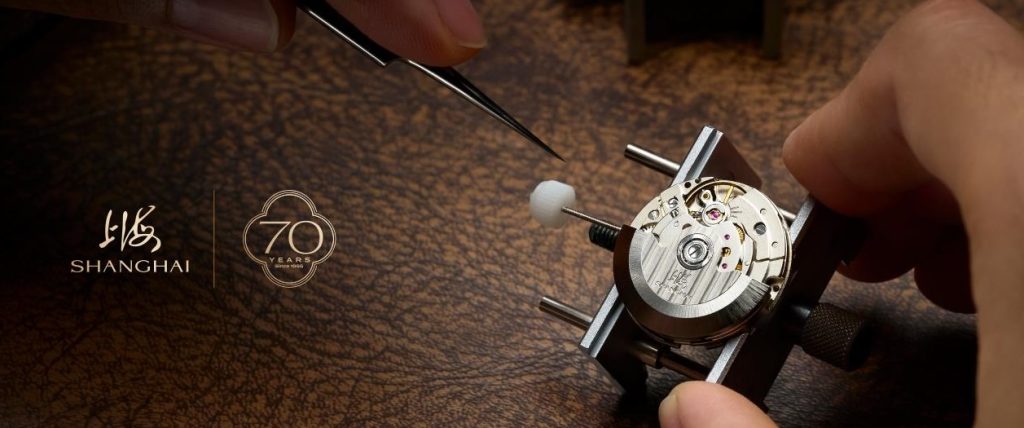
The Beginning of Chinese Mechanical Watchmaking
During the 1950s, China’s watch industry was still in its infancy. Most watches available in the country were imported, expensive, and difficult for ordinary consumers to obtain.
The Shanghai Watch Factory became one of the first major state-owned enterprises dedicated to producing Chinese-made mechanical watches and movements.
In 1955, the factory successfully developed one of China’s earliest domestically produced mechanical watches. This achievement became an important milestone in the history of Chinese industrial manufacturing.
Over the following decades, Shanghai-produced watches became widely recognized across China.
For many families during the 1960s, 1970s, and 1980s, owning a Shanghai mechanical watch represented reliability, status, and modern living.
Engineering and Movement Production
Unlike many companies that focused mainly on assembly, the Shanghai Factory invested heavily in movement engineering and manufacturing capability.
The factory gradually developed experience producing:
- Manual-winding movements
- Automatic movements
- Chronograph movements
- Skeletonized mechanical movements
- Tourbillon movements
Over time, Shanghai became one of the key centers of Chinese mechanical watch production.
The factory’s technical foundation also helped train engineers and workers who later contributed to the broader Chinese watch industry.
Even today, vintage Shanghai watches remain highly collectible among enthusiasts interested in early Chinese mechanical watchmaking.
The Rise of Chinese Clone Movements
As China’s manufacturing industry expanded during the 1990s and 2000s, demand for affordable mechanical movements increased rapidly.
At the same time, the global replica watch market was also evolving.
Early replica chronograph watches often relied on modified versions of existing Chinese movements, particularly the Asian 7750 platform produced by factories including Shanghai.
These movements became important because they allowed replica manufacturers to produce functional automatic chronograph watches at relatively low cost.
Although they were not exact copies of Swiss calibers, they played a major historical role during the early development of the modern replica watch industry.
For many years, Shanghai-produced chronograph movements were among the most widely used mechanical platforms inside replica watches before more advanced clone movements later appeared.
Historical Importance
The significance of the Shanghai Factory goes far beyond replica watches.
The factory represents one of the foundations of modern Chinese mechanical watchmaking.
From producing some of China’s earliest domestic mechanical watches to later participating in the growth of China’s movement manufacturing industry, the Shanghai Factory helped shape the technical capabilities of Chinese horology for decades.
Today, the name “Shanghai” still carries historical importance among collectors and enthusiasts interested in the evolution of Chinese watches.
Whether viewed as an industrial pioneer, a symbol of early Chinese manufacturing, or an important contributor to modern movement production, the Shanghai Factory remains one of the most iconic names in Chinese watchmaking history.